The So What…

Insight is nothing without Action

  • Boards love a strategic plan.
    It sounds important. Serious. Like something that will finally give shape to the chaos.

    But more often than not, a “strategic plan” is just a very long to-do list in disguise.
    And we don’t call it out, that’s a problem.


    Strategy and Planning Are Not the Same Thing

    strategy sets direction. It defines where we’re going and why.
    plan sets action. It defines what we’ll do and how.

    They’re connected, but they’re not interchangeable.
    A plan without a strategy is just motion without meaning.
    And a strategy without a plan is just intent without impact.

    It’s no wonder teams get stuck. We call things “strategic” when they’re really just tactical. We talk about “plans” when what we need is a clear direction of travel.


    Maybe Juliet was right, the confusion starts with the name.
    In agencies, you can be a planner or a strategist.

    In theory, those are two different roles.
    In reality? I’ve been both — and there was very little difference.

    Both were expected to set the strategy. Both were expected to build the plan.

    But there’s real beauty in defining the difference.
    Because planning and strategy require different muscles.

    Planning is operational. It’s sequencing, resourcing, mapping dependencies.
    And it’s what great account leads excel at — turning thinking into action.
    Strategy is conceptual. It’s about making choices, setting direction, and creating clarity in ambiguity.

    Both are vital. But they’re not the same. One must be lead by the strategy department, the other dies if it is only led by the strategy department.


    Why It Matters

    Because language shapes expectations and we can get better at asking for what we really want.

    When we ask for a strategy, we should be open to discussing the big picture — the why, the where, and the what if.

    When we ask for a plan, we should expect something much more grounded — the howwhen, and who.

    The trouble comes when we blur the two. For all of us.
    When a client asks for a strategy but really means a rollout plan.
    Or when an agency delivers a plan but sells it as strategy.

    The result? Work that lacks substance and frustrated parties on both sides.
    The whathow, and when — without the essential ingredient of the why.


    The So What?

    We can’t expect strategic outcomes from planning conversations — and we can’t plan effectively without a strategy.

    It is time to be clear on what you’re asking for.
    And be clear on what you’re offering.

    If you want a plan, ask for a plan.
    If you want a strategy, ask for something bigger. Something with meaning, direction, and purpose. Because great plans execute from great strategies.
    But even the best plan can’t make up for the absence of one.


    Let’s Talk Strategy →


  • When Instagram launched its new super wide, cinematic lens, my first reaction was… meh.
    In-feed? Fine. But click through to a brand’s actual page, and the big voids of black felt broken, wasted even. My OCD went a little off the charts.

    I wasn’t convinced it would catch on — unless someone found a truly creative way to use it.


    First Impressions vs Real Potential

    That’s the thing with new formats. We like what we know and at first, however creative, new can feel clunky and jarring and with such a different shape to play with, in a vertical world, this one felt super weird.

    But the magic always happens when someone takes something uncomfortable and pushes it beyond the obvious. When they use the limitations as part of the creativity. Then you can see true potential.


    Enter @Giovanni.Lamonte

    The true potential hit me when I saw this reel from Giovanni Lamonte. A freelance reel creator who has truly unlocked this formats potential.

    👉 Watch it here

    Not only does it look good in feed, but when you open it fully, the format truly comes alive. The black space is no longer dead space — it’s essential to the action. A rule-breaking use of the shape that transforms the void into part of the storytelling. Perfect for sports in this case.


    The So What?

    Every new format has the potential to feel awkward until someone shows us what’s possible.
    The cinematic lens isn’t about filling the frame. It’s about using the space — even the empty space — to say something new. And that means using the black space too in some cases.

    For brands and creators, the challenge is the same as it’s always been:
    Don’t just adopt the format as it appears in feed. 
    Hack it. Play with it. Break it. And do something unique.


    >>

    Instagram’s New Cinematic Lens: The need to know

    Instagram quietly dropped the format that’s shaking up feeds in Sept 2025, now known as the super-wide, cinematic Reel.

    Think of it as a panoramic strip running across your screen — an aspect ratio around 5120 × 1080 pixels that crops out the top and bottom of a standard video. The result? A widescreen, movie-like feel… sitting inside a vertical feed. Brands like KitKat were able to jump straight in with a single finger creative drop and as mentioned above, we are now seeing creators push and pull the feature to break its rules and create something truly unique.


    The Specs

    • Ultra-wide band, 5120 × 1080 px (approx.)
    • Leaves black “voids” above and below the action
    • Works like a cinematic crop — you’re curating exactly what makes the cut


    Let’s Talk Strategy →


  • “The funnel is broken.” It’s a line I’ve read more than once this year, hell a few times this week — but it’s not just provocation. It’s a reflection of a very real shift.

    Unless you’ve been living under a rock you’ll have probably felt it too. You type in a question into Google like: ‘Who’s the actor that played Crocodile Dundee (yes a real question I also asked this week)’ And instead of being served a bunch of IMDB style websites to go find out for yourself, you get a really helpful AI Overview. Voila – You need look no more and can pretend that you always knew it was Paul Hogan. (Edit – Bad example – Google just served me his image with a dig digital ‘duh’, no need for the AIO)

    The theory still stands which is why there are many sources stating:
    👉 Over 60% of Google searches now result in zero clicks.

    The traffic apocalypse is here.
    And if your success is measured purely on traffic, then yes — this is a disaster.

    But here’s the thing: traffic was only ever a means to an end.
    Our job in marketing was never to drive page views.
    It’s to drive desire. To spark intent and to ultimately make a sale.

    That doesn’t vanish in a zero-click, AI-led world.
    It just means we need to rethink how we get there.


    🚀 Enter The Loop

    At this year’s Inbound 2025 conference, HubSpot announced a sweeping rethink of the traditional marketing funnel: The Loop.

    Instead of a linear journey from awareness → consideration → conversion, The Loop is a continuous cycle powered by AI but importantly grounded in human creativity. Hurrah!!

    It’s not replacing marketers — it’s partnering with them. Just like AI already does in so many parts of our working lives: making complex tasks simpler, faster, and more informed.

    The model centres on four stages:


    🟡 The Four Stages of The Loop

    1. Express — Define Your Brand Identity
    Lay the foundations. Voice, tone, perspective. The all important human spark that ensures AI output feels distinct and authentic. Then test, experiment, create — faster than ever. This is where the marketer in me does a ‘Hallelujah’. Because it recognises that whilst AI is phenomenal, there is an all important role for the human creatives. The feeling we put behind a brand, the nuance and gut that lives and breathes in the brand identity creation, the tone of voice and the emotional ideation. That’s still ours to own. (For now)

    2. Tailor — Personalised Messaging at Scale
    Not just “Dear [Name]”. True personalisation. Using CRM data, behaviour, and intent signals to deliver context-rich messaging that actually resonates. This is where AI can just supercharge creativity. Bringing to life more ‘what ifs’ than any human mind could. And importantly ensuring we don’t miss anything out.

    3. Amplify — Meet Customers Where They Are
    Not just on your site. On TikTok. Reddit. Podcasts. And crucially, within AI-generated search responses. With tools like AI Engine Optimisation (AEO) graders, the aim is presence wherever discovery happens.

    4. Evolve — Measure, Iterate, Improve
    AI-enabled rapid feedback loops. Real-time optimisation. Campaigns that adapt in days, not quarters. Each cycle smarter than the last. Again this is where the strategist in makes that little excited squeaky noise. Long gone is the pain of having tons of data to go at and not enough humans or time to properly analyse it but again, its not about letting AI do all the work, the skill is in asking the right questions and letting AI take the brunt of the analysis. If we all spent more time asking interesting questions of data, think of the output and new angles we could uncover.


    🧠 Why It Matters

    What’s compelling about The Loop isn’t the tech really (however fabulous that is) — it’s the philosophy.

    • It keeps human creativity at the heart, particularly at the Express stage.
    • It updates the principles of inbound — trust, education, value — for an AI-first world.
    • It acknowledges the zero-click reality, ensuring brands stay visible even when the clicks don’t come.

    In short: it’s not just about chasing traffic anymore.
    It’s about staying present where decisions — human and machine — are being made and enabling smart and curious marketing teams to superpower their ‘What ifs’.


    The So What?

    I’ve said it once, I’ll say it again. Metrics matter. But they have to be the right ones.

    If we obsess over traffic, a zero-click landscape feels catastrophic.
    If we reframe around desire, trust, and building salient presence, it’s just a necessary evolution.
    And a bloody good one too if like me you’ve had way too many meetings where you need to persuade boards that investing in brand over PPC is in fact a great idea.

    The funnel was never perfect. The Loop might not be either. But it reflects something crucial:
    Marketing isn’t linear anymore and it is always evolving.

    The brands that win will be the ones that stop mourning clicks — and start mastering the art of staying curious in an ever evolving world.


    Let’s Talk Strategy →


  • When I worked agency-side, I couldn’t understand it. We’d send work to clients for review… nothing for days.
    We’d try to book a meeting about something urgent… and get the reply: “How’s a week on Tuesday?

    And yet if a client used the word urgent, we’d drop everything. Work weekends, late nights, Christmas Eve if we had to. Because urgent meant now.

    But for the client? Urgent often meant… “sometime this week.”

    The mismatch was infuriating. And it often led to resentment. Feelings like “Don’t they care about the campaign?” “Are we just not important to them?”

    Fast forward to me sitting in the Marketing Director’s chair, and here’s the truth:
    Sometimes no, it’s just not that important.

    And no — you absolutely should not be missing your kid’s birthday to turn around a deck.


    The Two Perspectives

    Here’s the challenge, for agencies, the campaign is the most important thing.
    It’s what the relationship revolves around. It’s the project the team has sweated over. It’s ultimately what they’re judged on and are incredibly passionate about.

    For clients? The campaign is one of ten things — often not even in the top three.

    Because alongside it sits:

    • A board grilling on why the product isn’t working
    • A finance team panicking over pricing
    • A competitor dropping a better rate/idea/campaign – social media jibe
    • HR fires, procurement issues, tech failures…

    In that context, your brilliant creative work is important, but not existential.

    Flip it around and the misunderstanding works the other way too.

    Clients see agencies as extensions of their team. It’s true, even if it doesn’t feel like it all the time.

    When they ask for a rebrief, or an extra round of concepts, or a “quick” full meeting, they rarely see the knock-on effect — or the ten other clients also expecting to feel like they’re the only one this week. And the best agencies account handlers always make you feel like you are number one!


    So What Do We Do About It?

    The answer isn’t in more Slack threads or polite email chains. It’s in talking more — properly.

    • Be transparent about workloads and timelines, on both sides.
    • Respect that “urgent” means different things depending on context. (Give the context!)
    • Set expectations early: What’s the process, how do we flag slippage, what does a genuine emergency look like? How and when can we push back… on both sides.
    • Learn how the other side works. Spend time in each other’s world and get to know each others priorities, be curious about what keeps each other up at night.
    • Ditch the supplier/buyer mentality and treat it as a true partnership.

    Because here’s the reality: shit happens.
    People get pulled from pillar to post, on both sides. Deadlines slip. Priorities shift.

    What matters isn’t pretending otherwise — it’s having the empathy, respect, and openness to navigate it together.


    The So What?

    The tension around time in client/agency relationships isn’t really about who’s busier.
    It’s about perspective.

    Agencies need to understand they’re one of many plates a client is spinning.
    Clients need to understand agencies are spinning plates for many clients.

    Bridging that gap takes honesty, empathy, and — most importantly — conversation.

    Because if you want work to move faster, smoother, and with less resentment on either side…
    Stop guessing and start talking. That’s where the magic happens.


    Let’s Talk Strategy →


  • You can almost picture the meeting.

    The strategy team walk in with a deck full of “category conventions” — and everyone in the room knows what’s coming. Or they think they do.

    Slide after slide of spotless tent setups.
    Hikers grinning like they’ve just had their teeth whitened.
    Someone standing victorious at the top of a mountain — not a bead of sweat, not a mud-splattered boot in sight.
    Perhaps they even started that ‘walk like this to get the perfect candid shot’ trend.

    Then one of them says it.

    “What a croc of sh*t.”

    Because here’s the truth:
    The outdoors isn’t perfect. It’s messy. Wet. Chaotic. Full of wrong turns, ripped coats, cold hands, mistimed snacks, mild peril, and mid-walk existential crises. We’ve all been there.

    And that’s exactly what Columbia’s new campaign — Engineered for Whatever — taps into.

    Credit – Columbia – Engineered for Whatever by Adam&Eveddb

    A Welcomed Shift in the Outdoor Narrative

    Created by adam&eveDDB, the campaign does what the best strategy always does:
    It ditches the fantasy and sells the reality.
    Not by stripping away aspiration, but by reframing it.

    Because in this world, the dream isn’t the mountaintop moment — it’s knowing that no matter what chaos awaits you, your kit is up to it.

    That’s the real dream.
    Not “look at me conquering nature.”
    But “look at me surviving it — soaked, swearing, perhaps a little battered and bruised but smiling.”


    Selling Chaos and Confidence

    What makes the campaign work isn’t just the humour or the visual flair — it’s that it gets it.

    It knows that the real outdoors is full of:

    • Badly erected tents
    • Misread maps
    • Stoves that never light
    • Socks that stay wet
    • Rain that starts the minute you unzip your tent
    • And yes, that rogue cow that you’re sure is following you

    It leans into those moments with joy, energy, and a healthy dose of “we’ve been there too.”


    And Behind the Scenes?

    It’s easy to imagine this brief being a lot of fun.
    A planner asking the team, “Tell us your worst camping story.”
    Someone admitting they once used their undies as a sling.
    Someone else confessing they threw a paddy halfway through the 3 peaks and demanded a Taxi in the middle of nowhere (#Guilty).

    What I love about this campaign is that it is the kind of creative that comes from empathy. From insight. From seeing a truth that the category has ignored — not because it’s ugly, but because it’s real.

    These are exactly the briefing sessions that filled me with joy and inspiration. And I hope the team also did it in the wild too. Which reminds me of the time i took a Creative Lead up a mountain, without gear… to prove a point when we worked on Berghaus. (Sorry Ben)


    A Grown-Up Dirt is Good

    There’s a bit of grown-up Persil in the bones of this campaign.
    Not just in the chaos, but in the confidence.
    It tells audiences: we’re not here to protect you from the mess — we’re here to make sure you’re ready for it.

    That’s the dream Columbia is selling.
    Not a picture-perfect hike. But a jacket that’ll survive the storm.
    Not the polished Instagram moment. But the real memory — with all the swearing and laughter, dirt and chaos that came with it.


    The So What?

    Perfection is no longer the dream for the outdoors world. Authenticity is.
    Columbia isn’t ditching aspiration.
    They’re just rooting it in something people actually recognise and relate to.

    How they got there, I hope was by truly embracing the art of putting yourself in the customers shoes. Taking the team outdoors, getting rained on, muddy, injured most likely. And experiencing it all first hand.

    So if you’re a brand trying to connect with real people living real lives, don’t shy away from the chaos.

    Embrace it. Experience it. And share it in a way that feels real.


    Let’s Talk Strategy →


  • Before hybrid. Before Teams.
    Before Slack folders and Mira boards and campaign assets with names like final_FINAL_v8ONLYUSETHISONE_CCAmends.pdf

    There was the wall.

    A real one. With actual work printed out. Held up with Blu Tack or bulldog clips. (Although Blue Tack officially got banned in one agency I worked in) A wall full of ads, headlines, scripts, layouts, banners, POS mockups, packaging and even emails — if it touched the brand, it was on the wall.
    All of it, in one place. Side by side. In full view.

    And then?
    We walked it.


    What ‘Walking the Wall’ Was (And Still Is)

    In the early days of my agency career, walking the wall was a sacred ritual. And one that could be equal parts exciting and scary.

    The creative director would lead, planners and account handlers in tow. Copywriters would hover. Designers would squirm. Everyone would have a say — but only after seeing the full picture.

    We’d start at the top and walk the work, one piece at a time, until we reached the end.
    Absolutely no laptop tabs. No buried decks. No “I didn’t see that one.”
    It was all right there. Usually covered in post it notes by the end of it.

    But it was an incredibly valuable moment that allowed us to:

    • Spot inconsistencies in tone or message
    • See where big ideas had been diluted (or forgotten entirely)
    • Catch rogue copy or off-brand visuals before they went live
    • Notice which channels were full of energy — and which were clearly unloved
    • Learn from how others approached the same brief

    It wasn’t just quality control.
    It was a shared experience. A pulse check. It kept the whole team honest — and the work cohesive.

    And towards the ‘go live’ date it could be the biggest WOW moment!


    What Does It Look Like Now?

    Today, we work in folders, files, shared drives, and tools that technically allow this kind of review — but in my experience rarely do.

    Assets are scattered across platforms. Projects are siloed by team, campaign, or channel. Work and feedback lives in slide decks, Jira tickets, and Slack threads.

    Yes, digital walls exist and the capability is out there.
    But when was the last time someone walked the full thing — end to end — with the team?


    Honestly… It Was Never Just About the Wall

    The real value of walking the wall was collective alignment. Literally seeing the bigger picture.
    It was about stopping the noise and creating time and space to sense check everything.

    It forced us to ask:

    • Does this all still ladder up to the same idea?
    • Are we telling the same story across every touchpoint?
    • Are we putting as much care into the ‘small’ stuff as we are into the headline?
    • What are we missing?
    • What could we do better?

    It was the craft of consistency.
    And created a culture of accountability and shared ownership. And yes sometimes it did lead to a few nervous faces and more than one redo.


    The So What?

    In a world that moves fast, where attention is fraught and workflows are more remote than real — consistency matters more than ever.

    If we want to build brands that show up with clarity and cohesion across every touchpoint, we need to make time for the wall again.

    Whether physical or digital, walking the wall is still one of the most effective ways to keep the work tight, the team aligned, and the strategy intact.

    Because strategy doesn’t fall apart in the big idea.
    It falls apart in the disconnects no one stopped to notice.

    So make the time. Walk the wall. The work (and your teams) will thank you.


    Let’s Talk Strategy →


  • There’s a line from a Cannes panel this year that’s stuck with me:

    “Your job is not to be universally loved. It is to be memorable.”

    It came during a session titled “DEI Didn’t Die”, and while the conversation centred on purpose-led work, the insight applies far more widely — especially in marketing and advertising.

    Because somewhere along the way, a lot of brands became terrified of being disliked.
    Of polarising. Of taking a stand. Of showing up in a way that might not appeal to everyone.

    And in trying to please everyone, they ended up doing something far worse:
    Being totally forgettable.


    ❤️ The OKCupid Effect

    To illustrate the point, one panelist in the talk used a dating analogy — and not a lazy one.
    He said that he had heard some insight from OKCupid, that the people who performed best on the platform weren’t the ones who were universally rated 5 out of 5.
    They were the ones who got an even mix of 1s and 5s.

    Why?

    Because strong reactions signal interest and ultimately drives action.
    You may love them, you may hate them — but either way, they stuck in your head.
    And in a space designed for high-frequency choice-making (dating or advertising), that kind of memorability wins.


    📺 Marketing Has Its Own 1s and 5s

    To illustrate this point, you only need think about some of the most effective campaigns of the last few years.

    Cadbury’s “Gorilla” – Critics hated it. It researched terribly. And yet Consumers loved it. Everyone remembers it.

    Paddy Power – Deliberately provocative. Rarely subtle. But undeniably sticky.

    KFC’s “FCK” apology ad – Took a brand failure and flipped it into one of the most shared, talked-about apologies of all time.

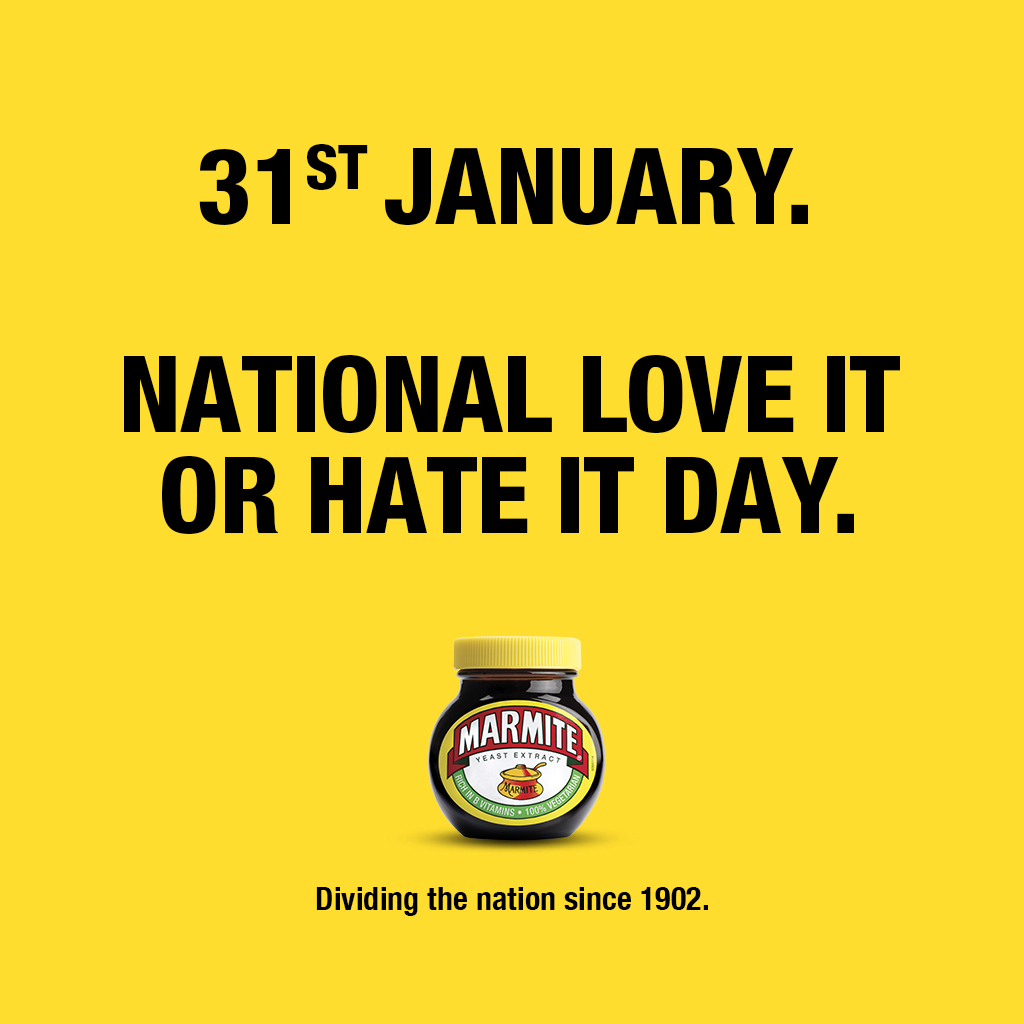
    Marmite – Turned its polarising taste into its biggest asset. Love it or hate it, everyone has an opinion.

    Meanwhile, how many “perfectly nice” brand campaigns launched in the last six months can you actually recall?

    Exactly.


    ⚠️ The Risk of Likeability Culture

    The pressure to be broadly appealing often leads to work that’s technically fine — but emotionally flat.
    It’s the brand equivalent of someone who “gets along with everyone”… but never gets a second date.

    Likeability is not a bad thing and can feel incredibly reassuring in the boardroom. After all, who doesn’t want to choose the idea that everyone universally said was nice. But when it becomes the primary goal, you lose what makes a brand feel distinctive and even more worrying ,compelling enough to be worth talking about.

    Because people don’t share ads they “quite liked.” They don’t even think about them.
    They share the ones they felt something about. Even — no especially — if that feeling is complicated.


    🧠 And It’s Not Just Creative…

    This principle applies to brand behaviour and partnerships too:

    • Purpose-led initiatives that spark real discussion will always face backlash — and that’s OK.
    • Standing up for something always means standing against something else – that requires bravery.

    Memorability requires edges. Likeability often sands them off.


    The So What?

    In a world of infinite content and limited attention, universal likeability is no longer the gold standard.

    To cut through, brands need to be bold, distinctive, and willing to polarise.
    That doesn’t mean being deliberately offensive or contrarian.
    It means being confident enough to leave a lasting impression — even if not everyone claps.

    Because if your campaign gets a few 1s and a few 5s, you’re going to be doing far better than the one that gets a quiet row of totally forgettable 3s.

    And in marketing, just like on a dating app, being unforgettable beats being universally liked.


    Let’s Talk Strategy →


  • There’s something happening to women in their late 30s and 40s —and it’s not just hot flashes or hormone charts.

    It’s a vibe shift. A neurological rewiring. A f*ck-it power that’s as biological as it is behavioural. And I am totally here for it.

    You may have already witnessed it: women in midlife no longer performing politeness, no longer contorting themselves to fit into archaic structures, no longer interested in being “nice” or playing team Mum. Just efficient. Clear. And totally unbothered.

    This is not burnout. Although lets not forget that is happening too often too. It’s a hormone-driven liberation—and it’s freaking people out, especially at work.


    The Biological Backstory: Why Women Stop Giving a F*ck

    Disclaimer: I am not a doctor. But I am a researcher and a women in perimenopause, and this is what I have found out so far.

    During perimenopause (typically mid-40s to mid-50s although in my experience, this started mid-30s), major hormonal shifts are happening:

    • Progesterone declines → Less people-pleasing, less soothing, less emotional buffering.
    • Estrogen fluctuates → Impacts serotonin and dopamine, shifting emotional priorities.
    • Oxytocin levels shift → Less pull toward emotional caretaking of others.
    • Cortisol recalibrates → Stress reactivity often lessens; emotional tolerance for nonsense drops.

    Women report feeling sharper, clearer, and less emotionally available for the micro-politics of work. They don’t need to be liked. They need to do what matters.

    Enter the boss-level boundary-setting and precision leadership that companies didn’t necessarily prepare for.


    The Reaction: Why Midlife Women Get Labeled “Difficult”

    When women stop softening their words and shaping their presence to make others feel comfortable, they get labelled:

    • “Too blunt”
    • “Not a team player”
    • “Intense”
    • “Unemotional”

    Translation? She’s no longer emotionally underwriting the comfort of others. She’s dangerous—but only to those whose expectations are that women need to be inherently Yes people or people pleasers.

    The very traits that midlife women are punished for—clarity, assertiveness, non-negotiable standards—are the exact traits we idolise in male leadership.

    This isn’t about attitude. It’s about biology finally aligning with experience, and no longer asking for permission.


    The Misread: Seeing Leadership as a Threat

    There’s a theory—unspoken but very alive—that as women gain autonomy and shed their socialization to please, they become “unmanageable.”

    The truth?

    They become un-gaslightable.

    They become uninterested in small talk when the strategy is broken.

    They become unwilling to smile while being interrupted in meetings.

    This isn’t insubordination. It’s leadership on its clearest setting.

    This is not the decline – This is the prime. What remains when you shed the unpaid roles of emotional caretaking, tactful self editing and fear of being ‘too much’ is laser focus on what is needed to succeed in business.


    Lucky For Us, The Role Models Are Everywhere

    From comedian Jenny Eclair, who called her menopausal rage a “superpower,” to media personalities like Davina McCall and Melani Sanders (of viral “We Do Not Care” fame), women are publicly owning this era as the most strategic and satisfying chapter of their lives.

    They’re not checking out. They’re checking in—to their power, their boundaries, and their real voice and inspiring and reassuring the rest of us that this new phase isn’t something to be feared by embraced.


    The So What

    Companies constantly say they want innovation, resilience, and no-nonsense execution. What they often don’t realise is that they’re overlooking their most battle-tested, biologically bulletproof leaders.

    If we keep labeling this power shift as “difficult,” we’ll keep losing our best, boldest talent at the exact moment she’s ready to lead without apology.

    It’s time to stop fearing the perimenopausal woman in the boardroom.

    She’s not the problem.
    She’s the answer.


    Let’s Talk Strategy →


  • First things first — this isn’t a shameless plug. Yes, I have a friend who works there.
    Yes, they introduced me to the brand.

    But no, I don’t hype things I don’t genuinely love.

    And Botivo? I genuiely love it.

    Botivo calls itself a “Big Sipping Botanical Aperitivo”.
    Non-alcoholic. Small-batch. Brewed on a farm in Hertfordshire.
    And somehow — it gives me the same end-of-day calm as a glass of wine… minus the hangover and dehydration.

    But this post isn’t actually about how good it tastes (though it really does).
    It’s about how it feels to become a customer of this brand.
    Because that’s where Botivo isn’t just good — it’s giving a masterclass in customer experience strategy. And I for one am here for it.


    🧡 A Brand Built on Heart

    I was gifted my first bottle and wow did that not last long. So I set out to buy some more. Distribution is still limited to a few major retailers and Ocado, so I ordered directly from their website.
    That’s when the experience really started.

    Delivery was quick, and clearly communicated.

    The product arrived in a beautifully branded pack — a welcomed departure from the many brown amazon packages that grace my doorstep.

    Inside was an elegant Z-fold A3 leaflet with signature serve ideas, origin stories, and an intro to “Yellow Perks” — their customer rewards scheme that includes refer-a-friend discounts and a gift on your fifth order.

    There was also a full keepsake mini recipe booklet with ideas for both alcohol-free and alcohol-friendly drinks.

    And — in a genius brand collaboration — there was a decent sample size of premium olive oil from Citizens of Soil, another independent brand built with care, story, and soul. They even included recipes combining the oil and Botivo in food pairings.

    The next day?
    An email from the makers. With personal stories of how they founded the brand and what they still do day in day out to keep it special.

    Yes, it was probably automated.
    But it didn’t feel like it.

    It felt personal. Warm. Curious.
    Like someone behind the brand genuinely wanted me to enjoy this new ritual I’d just bought into.


    So, why does this matter?

    Because so many DTC brands do the basics well — but very few make you feel something.
    Botivo didn’t just send me a product.
    They sent me an invitation.

    To slow down. To savour. To join a brand that values its customers as participants, not just purchasers.

    This wasn’t some loyalty point afterthought.
    It was a masterclass in how to make your customers feel like insiders from day one.


    The So What?

    When customer experience is crafted with real care — from packaging to perks to post-purchase comms — it doesn’t just delight people.
    It builds belonging.

    And when people feel like they belong, they buy again.
    They tell their friends.
    They join the club — and stay in it.

    Great product is only half the story.
    The other half?
    How you make people feel when they choose you.

    Botivo gets that.
    And I’ll be ordering again.

    And you can too from here https://www.botivodrinks.com/


    Let’s Talk Strategy →


  • Data is often treated like truth. Cold. Hard. Objective. For some its the holy grail and a hammer to beat you with. But here’s the catch: data doesn’t speak by itself — people interpret it.
    And depending on who is doing the interpreting, the story that data tells can look wildly different.

    Hand the same data set to a data analyst and a brand strategist, and you’ll get two very different takeaways. Both are valid. But they’re generally not the same. And that matters.


    👓 The Analyst’s View: What Does the Data Say?

    A good data analyst deals in clarity. In logic and in proof.
    Their goal is to report on what’s happening, based on the numbers in front of them. Unlike strategists, they don’t even really need to know the context to the data, as their job is to tell us what it says.

    The approach is typically:

    • What can be measured?
    • What patterns are emerging?
    • What’s performing well or underperforming?

    This kind of interpretation is essential — it keeps businesses honest, rooted in evidence. It powers dashboards, informs KPIs, and ensures we’re not leading the witness or picking and choosing the positive narrative.

    But by nature, this view is often binary. Fact-based. Less concerned with why something is happening — and more focused on what the numbers confirm.


    🧠 The Strategist’s Lens: What Might the Data Mean?

    A strategist or behavioural economist looks at the same dataset and starts turning it upside down.
    Not just what the numbers say — but what they don’t. What might sit behind them. What human behaviour, bias, context, or contradiction could be distorting the story.

    This mindset introduces:

    • Questioning of stated preferences vs revealed behaviour
    • Interpretation through cultural, psychological, or emotional frames
    • Curiosity around missing data or what wasn’t measured at all

    It’s less about reporting and more about interrogating. And yes this is where the tension often lies. Where a data analyst might say, “The campaign had low engagement,” a strategist might ask, “Were we even engaging the right people, in the right way, with the right context?”

    In that sense, strategy often lives in the grey. It searches for tension, nuance, and contradiction — not just patterns. But can also be perceived as trying to ‘spin’ a bad result or a better narrative.


    🔄 So, who’s right?

    They both are — but critically, not in silo.

    And that’s where multi-disciplinary teams and thinking becomes powerful.
    The best insights don’t come from one lens. They come from the collision between fact, context, psychology, culture, and sometimes — uncomfortable truth and ambiguity.


    The So What?

    The next time you’re handed a report or data deck, ask not just “What does this say?” — but also:

    “Who’s interpreting it? From what angle? And what might we be missing?”

    Because when you only rely on one lens, you risk oversimplifying the story.
    But when you blend analytical rigour with strategic empathy, you start to uncover not just what’s happening — but why it happened, how to respond, and where the next big step should go.


    Let’s Talk Strategy →