
There’s a line from a Cannes panel this year that’s stuck with me:
“Your job is not to be universally loved. It is to be memorable.”
It came during a session titled “DEI Didn’t Die”, and while the conversation centred on purpose-led work, the insight applies far more widely — especially in marketing and advertising.
Because somewhere along the way, a lot of brands became terrified of being disliked.
Of polarising. Of taking a stand. Of showing up in a way that might not appeal to everyone.
And in trying to please everyone, they ended up doing something far worse:
Being totally forgettable.
❤️ The OKCupid Effect
To illustrate the point, one panelist in the talk used a dating analogy — and not a lazy one.
He said that he had heard some insight from OKCupid, that the people who performed best on the platform weren’t the ones who were universally rated 5 out of 5.
They were the ones who got an even mix of 1s and 5s.
Why?
Because strong reactions signal interest and ultimately drives action.
You may love them, you may hate them — but either way, they stuck in your head.
And in a space designed for high-frequency choice-making (dating or advertising), that kind of memorability wins.
📺 Marketing Has Its Own 1s and 5s
To illustrate this point, you only need think about some of the most effective campaigns of the last few years.
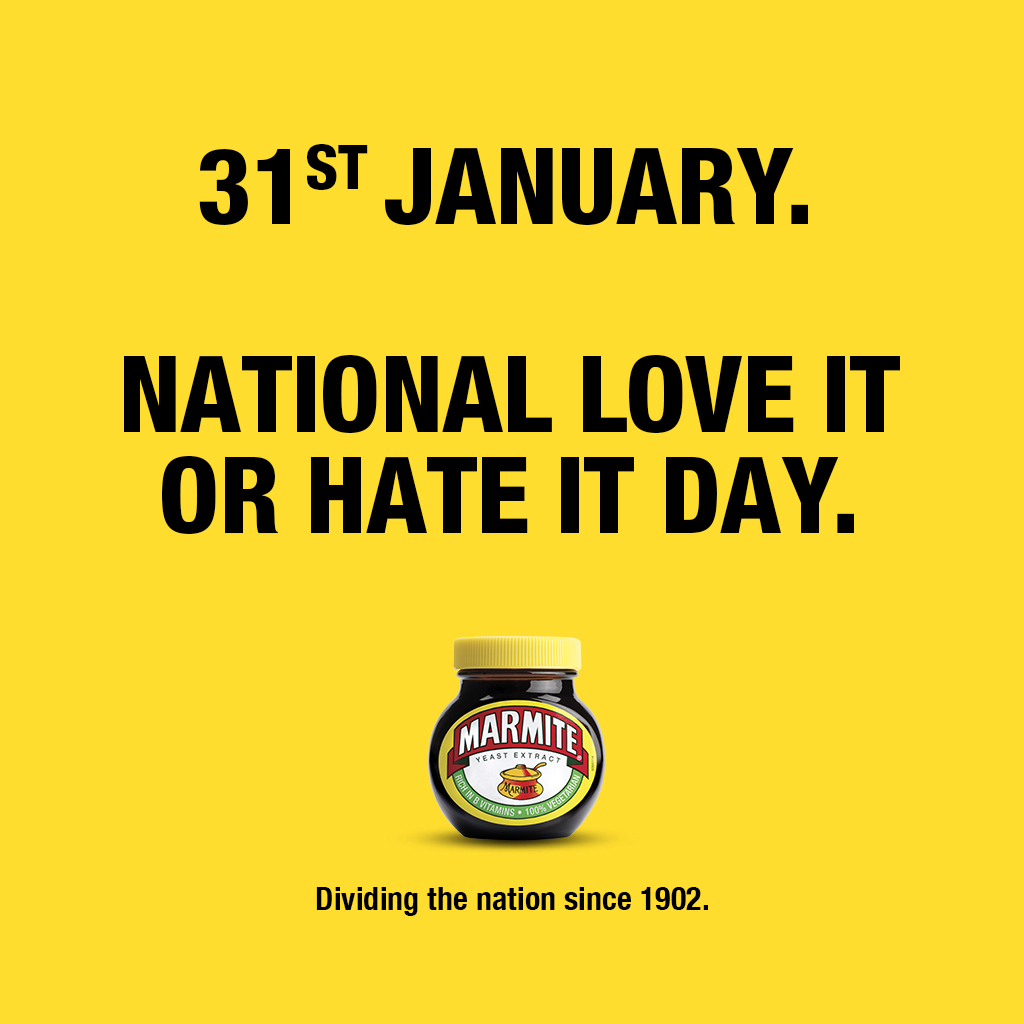
Cadbury’s “Gorilla” – Critics hated it. It researched terribly. And yet Consumers loved it. Everyone remembers it.
Paddy Power – Deliberately provocative. Rarely subtle. But undeniably sticky.
KFC’s “FCK” apology ad – Took a brand failure and flipped it into one of the most shared, talked-about apologies of all time.
Marmite – Turned its polarising taste into its biggest asset. Love it or hate it, everyone has an opinion.
Meanwhile, how many “perfectly nice” brand campaigns launched in the last six months can you actually recall?
Exactly.
⚠️ The Risk of Likeability Culture
The pressure to be broadly appealing often leads to work that’s technically fine — but emotionally flat.
It’s the brand equivalent of someone who “gets along with everyone”… but never gets a second date.
Likeability is not a bad thing and can feel incredibly reassuring in the boardroom. After all, who doesn’t want to choose the idea that everyone universally said was nice. But when it becomes the primary goal, you lose what makes a brand feel distinctive and even more worrying ,compelling enough to be worth talking about.
Because people don’t share ads they “quite liked.” They don’t even think about them.
They share the ones they felt something about. Even — no especially — if that feeling is complicated.
🧠 And It’s Not Just Creative…
This principle applies to brand behaviour and partnerships too:
- Purpose-led initiatives that spark real discussion will always face backlash — and that’s OK.
- Standing up for something always means standing against something else – that requires bravery.
Memorability requires edges. Likeability often sands them off.
The So What?
In a world of infinite content and limited attention, universal likeability is no longer the gold standard.
To cut through, brands need to be bold, distinctive, and willing to polarise.
That doesn’t mean being deliberately offensive or contrarian.
It means being confident enough to leave a lasting impression — even if not everyone claps.
Because if your campaign gets a few 1s and a few 5s, you’re going to be doing far better than the one that gets a quiet row of totally forgettable 3s.
And in marketing, just like on a dating app, being unforgettable beats being universally liked.
 The So What...
Leave a comment